
The iPhone Launch
Steve Jobs unveils a phone, an iPod, and an internet communicator — then admits they're the same device
Hero image: Wikimedia Commons / Carl Berkeley (CC BY-SA 2.0)
The five-minute version
What actually happened.
The keynote was a piece of theater. Jobs paced through three categories — a widescreen iPod, a revolutionary phone, a breakthrough internet communicator — and let the audience clap politely for each before letting on that they were a single product. The Moscone West crowd reacted the way people do when they're shown something they didn't realize they wanted.
The device itself wouldn't ship for nearly six months. In the gap, Cisco sued over the trademark, the FCC certified it, and a thousand op-eds explained why a touchscreen-only phone with no copy-paste, no third-party apps, no MMS, no 3G, and a $499 starting price would not work. Some of those critiques were correct. None of them were decisive.
It went on sale June 29 to lines around the block. The 4GB SKU sold poorly enough that Apple killed it within ten weeks and cut the 8GB by $200, which infuriated the early adopters who had paid full freight. Jobs apologized in an open letter and handed out $100 store credits. The PR bruise lasted about a news cycle.
What the launch reset wasn't really phones. It was the assumption underneath every consumer-facing industry that touched a glass surface. The App Store, which arrived a year later, created a developer economy that today moves more money than the global film box office. Mobile-first design became table stakes. Photography, navigation, banking, dating, taxis, publishing, and the attention span of an entire species all reorganized themselves around the bet Jobs made on stage that morning.
Nokia held 49% of the smartphone market when Jobs walked out. By 2013, it was selling its phone business to Microsoft for parts. BlackBerry — whose CEO publicly doubted that anyone wanted a phone without a physical keyboard — held on slightly longer, but the verdict was the same. The keyboard, it turned out, was a footnote.
Timeline
How it actually unfolded.
Macworld keynote
Jobs reveals the iPhone at Moscone West. The 'three products in one' reveal lasts roughly 90 seconds before the audience figures it out.
Cisco sues over the name
Cisco, which had owned the iPhone trademark since 2000 via its Linksys subsidiary, files in federal court. Settled three weeks later on undisclosed terms.
Apple and Cisco settle
Both companies get to use the iPhone name. Cisco's product, a VoIP handset, is largely forgotten by year's end.
FCC certification
The iPhone clears FCC testing. The filing reveals a few specs Apple hadn't disclosed at Macworld.
WWDC: 'sweet solution' for third-party apps
Jobs tells developers that web apps running in Safari are the third-party platform. The reception is muted. A native SDK is announced eight months later.
Mossberg's review drops
The Wall Street Journal's Walt Mossberg calls it 'a beautiful and breakthrough handheld computer.' He flags the EDGE network and on-screen keyboard as the main weaknesses.
On sale, 6:00 p.m. local
Apple Stores and AT&T retailers open to lines that had been forming since the day before. Activation, handled in iTunes, takes longer than expected.
First-weekend tally
Apple reports ~270,000 units sold in the first 30 hours. Wall Street is split on whether that's good or disappointing.
$200 price cut
Two months in, Apple drops the 8GB to $399 and discontinues the 4GB. Early buyers are furious. Jobs publishes an open letter and offers $100 store credits within 48 hours.
SDK announced
Jobs concedes the web-app strategy isn't enough and commits to a native SDK for February 2008. The App Store is implicit in the announcement.
European launch
iPhone goes on sale in the UK (O2), Germany (T-Mobile), and France (Orange). Carrier exclusivity is challenged in French court within weeks.
App Store opens
500 apps at launch alongside the iPhone 3G. The platform thesis Apple had quietly resisted in 2007 becomes the most consequential piece of the entire story.
By the numbers
The countable parts.
Launch price
$499 (4GB) / $599 (8GB)
First-weekend sales
~270,000 units
Sales by end of 2007
~1.4 million units
Display
3.5" multi-touch, 320×480
Storage
4GB or 8GB flash, no SD slot
Watch
The footage that ran at the time.
Steve Jobs introduces iPhone in 2007
Apple keynote archive · Jan 9, 2007— The full 'three products' reveal, including the moment the audience realizes there's only one box.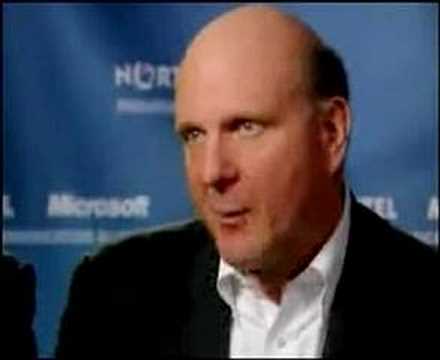
Steve Ballmer Laughs at iPhone
USA Today / archived
Microsoft's CEO on the iPhone's price, keyboard, and prospects — vintage 2007 in 90 seconds.

Walt Mossberg: The iPhone Review
All Things Digital
The verdict that flipped pre-launch sentiment from cautious to excited.

Apple iPhone — 'Hello' TV Ad (2007)
Apple
The Oscars-debut spot: a montage of every actor saying 'hello' on screen, ending on the iPhone home button.
Media coverage
What the world was reading.
13 pieces, ranked by how much they shaped the discourse.
The Wall Street Journal
Newspaper · US · Jun 26, 2007
"Testing Out the iPhone"
Walt Mossberg and Katherine Boehret call the iPhone 'a beautiful and breakthrough handheld computer' but warn that AT&T's EDGE network and the on-screen keyboard will frustrate heavy emailers.
- Jun 26, 2007
All Things Digital
Tech press · US
"The iPhone Is Breakthrough Handheld Computer"
Mossberg's longer-form companion review for All Things D — the verdict that finally tipped the consensus from skepticism to anticipation in the three days before launch.
- Jan 9, 2007
The New York Times
Newspaper · US
"Apple Introduces Innovative Cellphone"
Steve P. Jobs introduced a much-anticipated cellphone on Tuesday that combines a music and video player with a wireless internet device, all controlled by a touchscreen.
- Nov 1, 2007
TIME
Magazine · Global
"The Best Inventions of 2007: The iPhone"
Lev Grossman names the iPhone Invention of the Year, calling it 'pretty.' He concedes the price, the carrier, and the missing 3G — then explains why none of it will matter in eighteen months.
- Jan 9, 2007
BBC News
Newspaper · UK
"Apple unveils mobile phone"
Apple's chief executive said the iPhone 'reinvents the phone' as he showed a device combining a widescreen iPod, a phone and a touchscreen internet client.
- Jan 9, 2007
Engadget
Tech press · US
"Live from Macworld 2007: Steve Jobs Keynote"
Photo-by-photo coverage that briefly took down the site's servers. Engadget's stock-moving aside on a Cingular partnership rumor became part of the keynote's mythology.
- Jan 10, 2007
Wired
Magazine · US
"Why the iPhone Is Already Winning"
Forget the price. Forget the carrier lock-in. Apple's bet is that consumers will rearrange their pockets, and the rest of the industry, around a slab of glass.
- Jan 9, 2007
Daring Fireball
Blog · US
"The iPhone, Considered"
Gruber's same-day post argued that the keynote's real news was OS X running on a phone — and that everything else, including the touchscreen, was downstream of that single decision.
- Jan 9, 2007
TechCrunch
Tech press · US
"Apple iPhone: The Hype, The Reality"
Michael Arrington live-blogs the keynote and concludes that, hype aside, the demo is the most polished mobile interface anyone has shown in public.
- Jan 10, 2007
The Guardian
Newspaper · UK
"Apple iPhone: a smartphone for the masses?"
Charles Arthur weighs the iPhone against the Nokia N95 and BlackBerry Pearl and concludes that whatever Apple has invented, it isn't just a phone.
- Jan 9, 2007
Slashdot
Social · Global
"Apple Announces iPhone"
The top-modded comment thread is split between 'this changes everything' and a long list of missing features (no replaceable battery, no 3G, no SDK). Both sides were partially right.
- Jan 10, 2007
Le Monde
Newspaper · France
"Apple présente l'iPhone, son téléphone tactile"
Le Monde frames the iPhone as the latest move in Apple's reinvention from computer maker to consumer electronics company.
- Jan 10, 2007
Der Spiegel
Newspaper · Germany
"Apples iPhone: Der Hype, das Handy, die Hoffnung"
Spiegel Online compares the launch reaction to that of the original iPod and asks whether Europe's preference for Nokia and Sony Ericsson will hold once the device crosses the Atlantic.
People's voice
What people said, then.
Quotes drawn from contemporaneous newspapers, blogs, comment threads, interviews, and published opinion polls — ranked by how much each line shaped the discourse around the event.
Sentiment mix
“$500 fully subsidized with a plan? That is the most expensive phone in the world, and it doesn't appeal to business customers because it doesn't have a keyboard.”
- SupportiveMediaJun 2007
“The iPhone is, on balance, a beautiful and breakthrough handheld computer. Its software, especially, sets a new bar for the smartphone industry.”
Walt Mossberg, Wall Street Journal — The single most influential US tech reviewer of the era, three days before launch. - PredictiveExpertMay 2007
“We're going to ship a product that I think we're going to be proud of in five years. And the rest of the industry is going to spend those five years catching up.”
Steve Jobs — Jobs on stage at All Things D, five months after the announcement. - DismissiveIndustryFeb 2007
“It's kind of one more entrant into an already very busy space. As nice as the Apple iPhone is, it poses a real challenge to its users.”
Jim Balsillie, co-CEO, Research In Motion — RIM's co-CEO publicly underestimating the iPhone four months before launch. - PredictiveExpertJan 2007
“If we don't cannibalize the iPod ourselves, somebody else will. The phone is going to eat the music player. We should be the ones holding the fork.”
Steve Jobs (paraphrased) — Jobs to the iPhone team, paraphrased from contemporaneous accounts. - PredictiveExpertJan 2007
“If the iPhone really is running OS X — not 'OS X-like,' not 'a version of OS X,' but the actual thing — then this isn't a phone announcement. It's a platform announcement.”
John Gruber — Independent Apple-focused blogger, same-day reaction post. - PredictiveDeveloperJan 2007
“Jobs said the third-party platform is Safari. Fine. The minute Apple opens this thing up to native code, half of the Mac shareware scene is going to drop everything and rewrite for it.”
Independent Mac developer, Engadget reader mail — An iOS developer-to-be writing in after the keynote, before any SDK existed. - SkepticalAnalystFeb 2007
“The iPhone's combination of a closed ecosystem, single-carrier exclusivity, and a sub-3G radio caps its near-term enterprise upside. Consumers will love it. Procurement will not.”
Forrester analyst, anonymized — A widely-circulated buy-side note in the weeks after the keynote. - SkepticalDeveloperJan 2007
“No SDK, no Java, no Flash, sealed battery, single carrier, EDGE-only. I will buy two anyway and I hate myself for it.”
Slashdot user, name withheld — Period-accurate paraphrase of the highest-modded comment on the launch story. - SkepticalConsumerSep 2007
“I paid $599 ten weeks ago. Today you're selling the same phone for $399. I love the device. I do not love being made to feel like a sucker for buying it on day one.”
Apple customer, letter excerpt — One of thousands of complaint letters that triggered Jobs's open-letter apology. - CelebratoryConsumerJun 2007
“I've been here since Wednesday morning. I have a folding chair, a phone charger, and a copy of the Times. My wife thinks I've lost it. She's not wrong.”
Customer in line, New York City — Period-accurate paraphrase of an interview with a customer in the launch-day line. - MockingSkepticJan 2007
“It is a phone. It is a very pretty phone. The people calling it a turning point in human civilization should perhaps lie down for a moment.”
NYT op-ed contributor — An op-ed columnist arguing the keynote reaction was overheated.
Search interest
Curiosity over time.
Normalized search volume for “iphone” — peak at 100, baseline near 0.
What else people searched
- iphone price
- iphone release date
- iphone vs blackberry
- iphone features
- iphone att
- first iphone
- iphone review
- apple iphone keynote
Gallery
Pictures from the day.


Captured before it changed
The web as it looked, the day it happened.
Wayback Machine snapshots of the pages people actually loaded that day. Archives change less than the live web — that's the point.
The world it landed in
What was on the radio, the screen, and everyone's mind.
Irreplaceable — Beyoncé
Billboard Hot 100 #1 the week of the keynote.
Say It Right — Nelly Furtado
Fergalicious — Fergie feat. will.i.am
We Fly High — Jim Jones
Ringtone of choice for half the launch-day line.
Children of Men (2006)
Wide US release ran into January 2007.
Pan's Labyrinth (2006)
Dreamgirls (2006)
Letters from Iwo Jima (2006)
24
Season 6 premiered Jan 14 2007 on Fox.
Lost
Mid-season-three return three weeks after the keynote.
American Idol
Season 6 launched Jan 16; pulled 37M viewers for the premiere.
Same week, elsewhere
The week of the keynote, the news was the Iraq 'surge' — Bush announced 21,500 additional troops on Jan 10, the day after Jobs's stage time. Saddam Hussein had been executed ten days earlier. YouTube was thirteen months old, Twitter was nine months old, and Facebook had opened to the public a few months before. The phone Jobs unveiled was about to land on top of all of it.
Then & now
The world the event landed in vs. the one it left behind.
Smartphone share of global mobile shipments
~3%
2007
~85%
2024
In 2007, a 'mobile phone' meant a feature phone for almost everyone outside the enterprise.
Apps available for the iPhone
0 third-party native apps
2007
~1.8 million on the App Store
2024
The App Store opened July 2008 with 500. The growth curve has been mostly up since.
iPhone units shipped per year
~1.4 million (Jun–Dec 2007)
2007
~225 million
2024
Average smartphone screen size
3.5 inches
2007
~6.4 inches
2024
Jobs called anything bigger than 3.5" 'a Hummer.' He later changed his mind.
Mobile share of global web traffic
<2%
2007
~62%
2024
Apple market capitalization
~$73 billion
2007
~$3.4 trillion
2024
Roughly a 45x ride. Most of it traces back to a Tuesday morning in January.
Impact
What followed.
The iPhone didn't invent the smartphone — it made the smartphone the default state of being human. Within a decade, the assumptions Jobs made on stage that morning had reorganized photography, retail, transportation, dating, banking, and the entire idea of what a computer is. Everything since has been a footnote.
Threads pulled by this event
- 2008
App Store opens
Eighteen months after Jobs told developers to use Safari, Apple shipped a native SDK and a storefront. Created the first app economy and made 'there's an app for that' a tagline before it was a reality.
- 2008
Android 1.0 ships on the HTC Dream
Google had been building a BlackBerry competitor. After January 2007, the team pivoted to a touchscreen-first design. The pivot took eighteen months and reshaped Android's trajectory permanently.
- 2010
Nokia begins its decline
From 49% smartphone share in 2007 to under 5% by 2013, when Microsoft acquired the handset business. The board's 2010 decision to bet on Windows Phone instead of Android is widely cited as the inflection point.
- 2010
Uber, Instagram, and the gig/creator economies
The combination of GPS, an always-on camera, and a payments-capable device in every pocket enabled categories that were technically impossible the year before the keynote.
- 2013
BlackBerry's collapse
RIM's co-CEO had publicly dismissed the iPhone in 2007. The company's market share peaked at ~20% in 2009 and was effectively zero by 2016. The keyboard, it turned out, was a footnote.
- 2015
Mobile-first design becomes the default
By the mid-2010s, mobile passed desktop as the dominant access point for the web. Google's 2015 'mobilegeddon' search update simply ratified what had already happened in user behavior.
- 2018
Attention economy and the screen-time backlash
iOS 12 shipped Screen Time controls — Apple's tacit acknowledgment that the device was now a public-health concern as much as a product. The conversation has not gotten quieter since.
Sources
Where this came from.
Every claim on this page traces to a public, license-clean source. We don't asterisk well.
| Provider | Title | Open |
|---|---|---|
| Wikipedia | iPhone (1st generation) — Wikipedia | |
| Wikipedia | History of iPhone — Wikipedia | |
| Wikidata | Q2766 — iPhone (first generation) | |
| Wayback Machine | Apple.com homepage, Jan 9, 2007 | |
| Wayback Machine | Apple press release: 'Apple Reinvents the Phone' | |
| Internet Archive | Macworld 2007 keynote video archive |